 OPTIMUS DISTRIBUTOR
Check valves that close before flow reverses
Swing check valves suit low-cycling, clean liquid lines where a slower-closing disc is acceptable; axial silent check valves belong wherever reverse flow must be stopped before it accelerates — pump discharge, compressor lines and systems prone to water hammer. DFT of Exton, Pennsylvania pioneered spring-assisted in-line axial check valves, and Optimus Distributor supplies the DFT range in Malaysia with engineering support on selection and orientation.
- Principal
- DFT Inc.
- Origin
- Exton, Pennsylvania, USA
- Makes
- Engineered silent / axial check valves
- Status
- Authorised distributor
- Key ranges
- Basic-Check · GLC · SCV · PDC
Where each closing action belongs
Every check valve has one job — let flow pass forward, stop it coming back — but the two families do that job on very different clocks. A swing check hangs a disc on a hinge: gravity and reversing flow slam it shut, which is fine on a slow, clean, low-cycling line and rough on everything else. An axial silent check holds a short-travel disc against a spring in the flow path, so the disc is already moving toward its seat as forward velocity decays and is closed before reverse flow gets organised. No slam, no pressure spike, no noise — which is where the name "silent" comes from.
| Criterion | Swing check | Axial silent check |
|---|---|---|
| Closing action | Hinged disc, closed by gravity and reversing flow | Spring-assisted disc, closing as forward flow decays |
| Water hammer risk | Higher — the disc slams after reversal begins | Low — closed before reverse flow accelerates |
| Mounting | Mostly horizontal runs | Any orientation with adequate spring selection |
| Best at | Slow, clean, low-cycling liquid lines | Pump discharge, compressor lines, hammer-prone systems |
If your line cycles often, follows a pump, or has ever banged at shutdown, the axial family is the engineered answer — and DFT is the principal we carry for exactly that duty.
Who DFT is
DFT Inc. of Exton, Pennsylvania, USA, engineers silent and axial check valves — it is a specialist, not a general-line valve maker, and its in-line spring-assisted designs are the reference point most engineers mean when they say "silent check". Optimus Distributor is an authorised distributor for DFT in Malaysia, so the product on our racks arrives through the manufacturer's own channel and spec questions can go back to the principal for the manufacturer's answer. What that channel is actually worth is spelled out in what an authorised distributor guarantees you.
Basic-Check, GLC, SCV and PDC — where each belongs
| Range | What it is | Connection | Where it belongs |
|---|---|---|---|
| Basic-Check | Compact in-line silent axial flow check valve | Per DFT datasheet | General liquid and gas service behind pumps and compressors where space is tight |
| GLC | NAB (nickel-aluminium bronze) silent check valve | Per DFT datasheet | Seawater, brackish and other services where NAB's corrosion resistance earns its place |
| SCV | Threaded in-line check valve | Threaded ends | Smaller-bore utility, instrument and OEM lines that screw straight into the run |
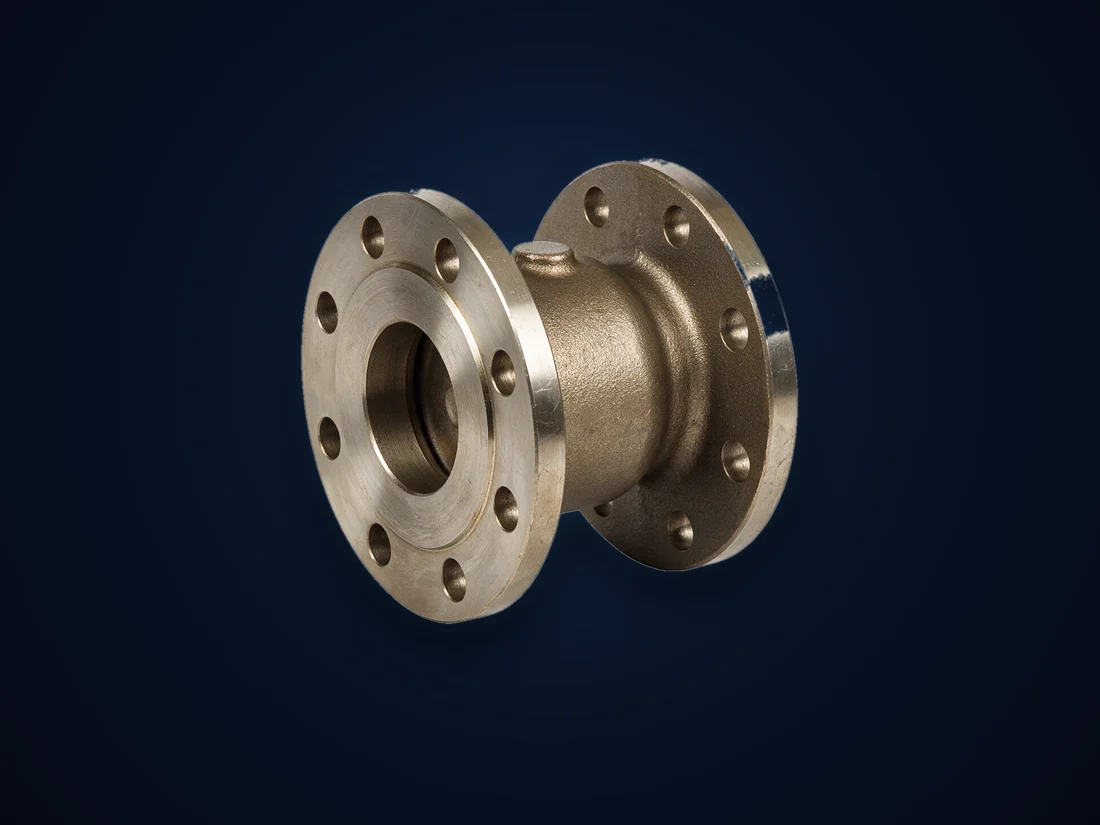
| PDC | Flanged check valve | Flanged ends | Process and pump-discharge lines specified flange-to-flange for maintainability |
Range names are DFT's own; descriptions summarise the principal's published literature as reference guidance. Confirm sizes, pressure classes and end details against the current DFT datasheet and your purchase order — that check is part of every quotation we issue.
Stopping water hammer at the source
Water hammer at a check valve is not a mystery: flow reverses, the disc slams, and the column of liquid behind it stops in milliseconds. The pressure spike that follows shakes hangers loose, splits gaskets and fatigues welds — and it gets blamed on the pump, the pipework, everything except the valve that caused it. The axial answer removes the cause instead of muffling the symptom: a spring closes the disc while forward flow is still decaying, so there is no organised reverse flow left to slam anything. That is the whole engineering case for the DFT family, and it is why the fix for a banging line is usually a selection change, not a pipe-support project. The full mechanism — causes, symptoms and the selection rules that prevent it — is in our guide to what causes water hammer and how valve selection prevents it.
Orientation and installation rules
A check valve that is right on paper can still fail in the pipe if it is installed against its design assumptions. The rules below are general engineering practice for spring-assisted axial checks — bring the actual line layout to the enquiry and we confirm them against the DFT datasheet for your size and figure.
- Match the spring to the orientation — vertical flow-up, vertical flow-down and horizontal runs each load the disc differently
- Respect upstream straight-run guidance near pumps and elbows so the disc sees stable flow, not turbulence
- Size for the operating flow, not the pipe bore — an oversized check chatters at partial lift and wears itself out
- Keep the valve serviceable: flange access and lay length matter when the line comes due for inspection

An engineer on the enquiry, not just a price
Check valves are the classic go-too-cheap trap: the generic swing check costs less on the purchase order and pays it all back in slammed lines and downtime. We sit down with your engineers to make sure the valve fits the service — flow range, fluid, orientation, cycling — before a number goes on the quotation. Send the line size and duty on WhatsApp, or start from the duty-first selection guide; DFT sits alongside the KITZ line on the same racks, so one enquiry covers the whole line list.
A banging line is a selection problem. Send it over.
Line size, fluid and orientation is all it takes. Price, lead time and stock on the first reply — and the right spring on the disc.