 OPTIMUS DISTRIBUTOR
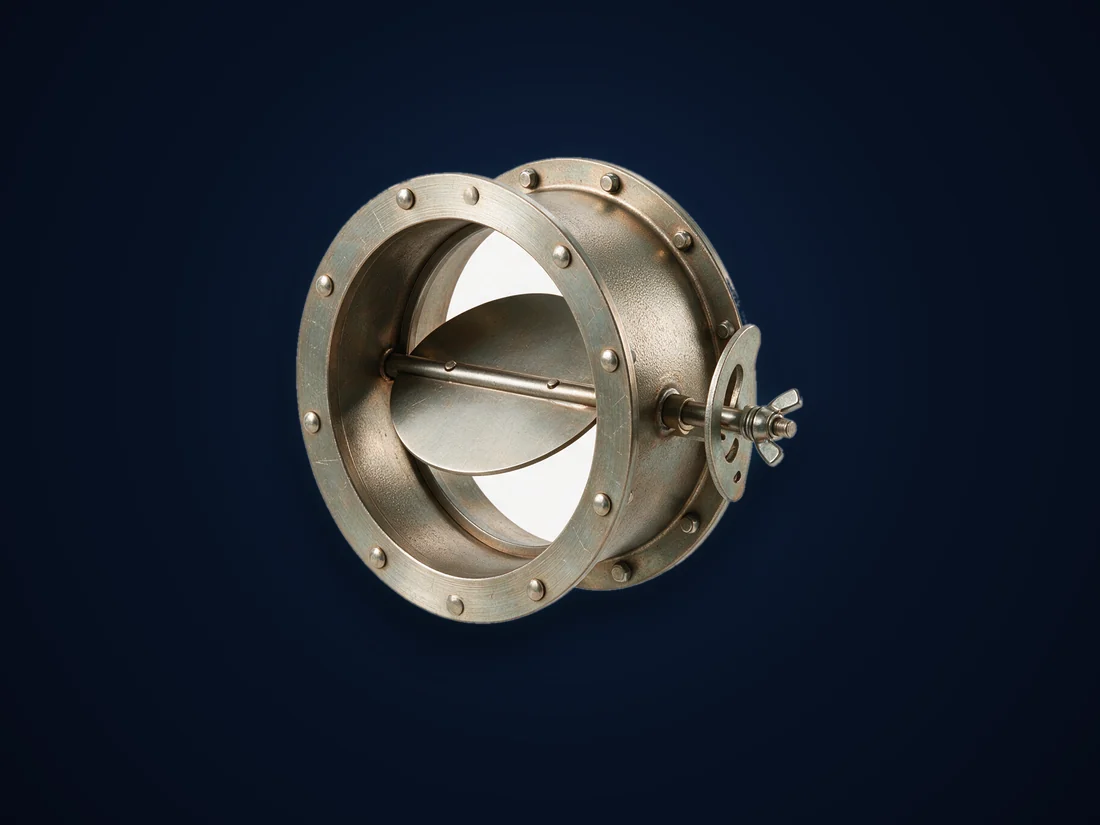
A single blade on a central shaft. Compact, fast quarter-turn action, the economical choice for balancing and general isolation in round or square duct.
DTL · United Kingdom · Dampers
Industrial dampers, sized to the duct's real duty
Damper Technology Limited (DTL) of Eastwood, Nottingham manufactures butterfly, louver and guillotine dampers for industrial air and flue gas systems, and is a member of the Orbinox Valves international group. Optimus Distributor supplies DTL dampers in Malaysia for power, palm oil refinery and general industrial plants, with engineers who confirm blade type, actuation and materials against each duct's temperature, pressure and dust load.
- Principal
- Damper Technology Ltd
- Origin
- Eastwood, Nottingham, UK
- Group
- Orbinox Valves international group
- Makes
- Butterfly, louver, guillotine dampers
- Status
- Authorised distributor
Who DTL is
Damper Technology Limited builds dampers and nothing else — the isolation and control hardware for ducts, stacks and flue gas paths that a valve catalogue cannot cover. Based in Eastwood, Nottingham in the UK, DTL is a member of the Orbinox Valves international group, which places a damper specialist inside an international valve-engineering family. Optimus Distributor is an authorised distributor for DTL in Malaysia: enquiries route through the manufacturer's own channel, and duct-specific engineering questions go back to the people who designed the blades. Where the duty is unusual — high temperature, abrasive dust, a stack that must be walked into safely — that line back to the principal is the difference between a damper that fits the drawing and one that fits the duty.
Butterfly, louver and guillotine: choosing the pattern
Three blade geometries cover almost every industrial duct. Which one belongs on yours is a duty question — how tight the shutoff, how hot the gas, how much dust it carries — not a preference question.
Multiple parallel blades in a frame. The control pattern — opposed blades modulate flow smoothly, and large faces stay stiff where a single blade would flex.
A blade that slides fully out of the gas path. The isolation pattern — positive separation for maintenance access, unobstructed bore when open.
The full decision logic — duty first, budget second — is the same one we apply to valves in the duty-first selection guide; dampers simply add temperature and dust to the questions list.
03 · Pattern selection
Three patterns, mapped to duty
| Pattern | Operation | Isolation vs modulating | Temperature considerations | Dust & particulate |
|---|---|---|---|---|
| Butterfly | Quarter-turn single blade | General isolation and coarse balancing; seal options tighten shutoff | Blade and seal materials set the limit; metal-seated builds go hotter than elastomer | Handles moderate dust; the open blade stays in the flow path |
| Louver | Multiple linked blades | The modulating pattern — opposed-blade action gives usable control across the stroke | Multiple short blades resist thermal distortion on hot, wide ducts | Blade edges and linkages need review on heavy dust; seal-air options exist |
| Guillotine | Rising blade, fully retracting | Positive isolation for maintenance — the blade leaves the bore entirely | Suited to hot flue gas; the parked blade sits out of the gas stream | Best on dust-laden flows — nothing remains in the bore to foul or erode |
Pattern guidance is general damper engineering practice. Ratings, materials and seal options for a specific DTL model come from the principal's current literature — confirm them against the datasheet and your purchase order, which is part of every quotation we issue.
Flue gas and combustion air
The hardest damper duties in Malaysia sit around combustion: boiler flue gas paths in palm oil refineries and oleochemical plants, fired heaters and stacks in oil, gas and petrochemical service, and the draught systems of power plants. These ducts run hot, carry ash and combustion products, and still have to give maintenance crews a positive, provable isolation before anyone opens an access door. That is precisely the work the guillotine pattern exists for, with louvers modulating the combustion air on the supply side. Because the failure cost is a shutdown extended or a permit-to-work refused, we treat flue gas enquiries as engineering conversations first — duct conditions on the table before any model number.
Materials and temperature limits
Damper selection is materials selection twice over: the frame and blade must hold their stiffness at operating temperature, and the sealing system must survive it. The working rules our engineers apply are general practice — the specific limits for any DTL model come from its datasheet.
- Carbon steel bodies serve general air and lower-temperature gas duty economically
- Stainless and heat-resisting grades take over as flue gas temperatures and corrosion climb
- Elastomer seals give the tightest ambient-duty shutoff; metal seating survives where elastomers cook
- Thermal expansion needs designing for — a blade that binds when hot is an isolation failure, not an inconvenience
Actuation, isolation and the enquiry
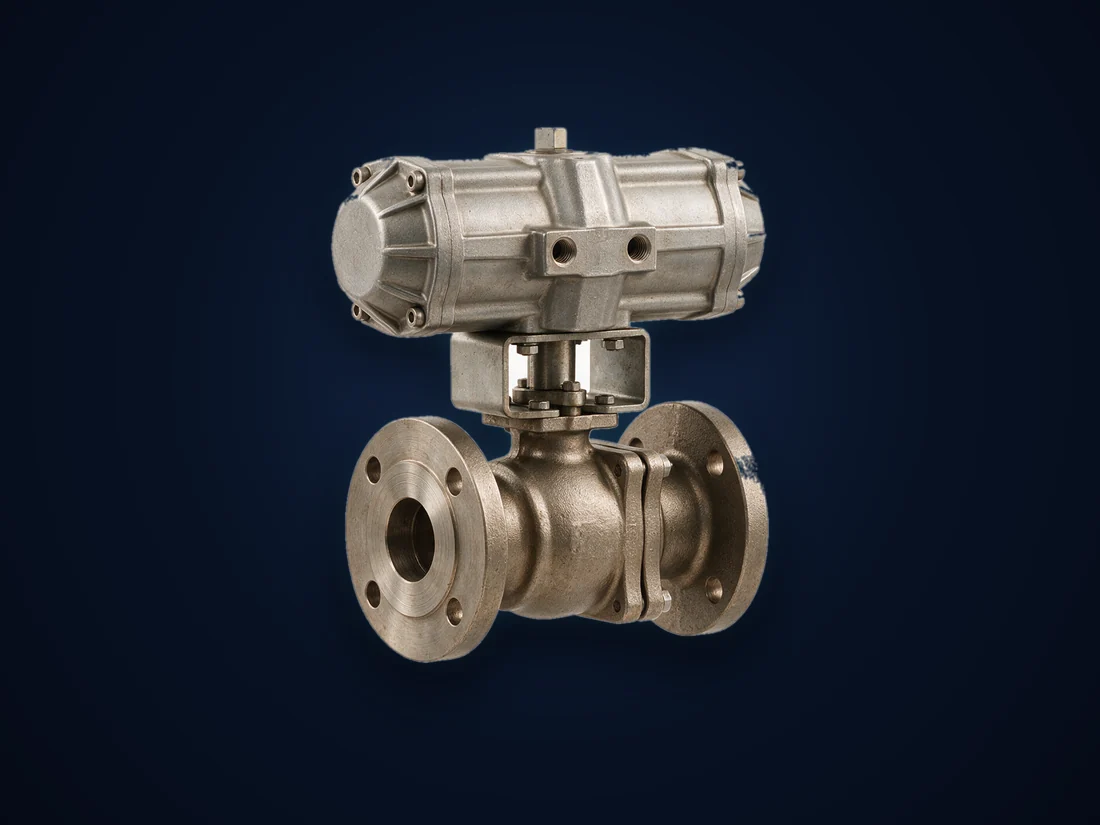
Most industrial dampers are driven, not hand-operated: quarter-turn actuators for butterfly patterns, linkage drives for louvers, rising drives for guillotines — the same selection logic we set out on the actuators and automation page, applied to a duct. An enquiry that names duct size, gas, temperature, dust load and the duty — isolate, modulate, or both — comes back as a resolved specification, not a brochure. More background reading lives in our insights library, and the glossary decodes the damper and actuation terms specifiers trip over in plain language.
DTL · Authorised distributor
Bring the duct conditions. We'll bring the pattern.
Size, gas, temperature and dust load is enough to start. Price, lead time and stock on the first reply — and an engineer on the line for the hard ones.