 OPTIMUS DISTRIBUTOR
Actuated valves that arrive matched, mounted and tested
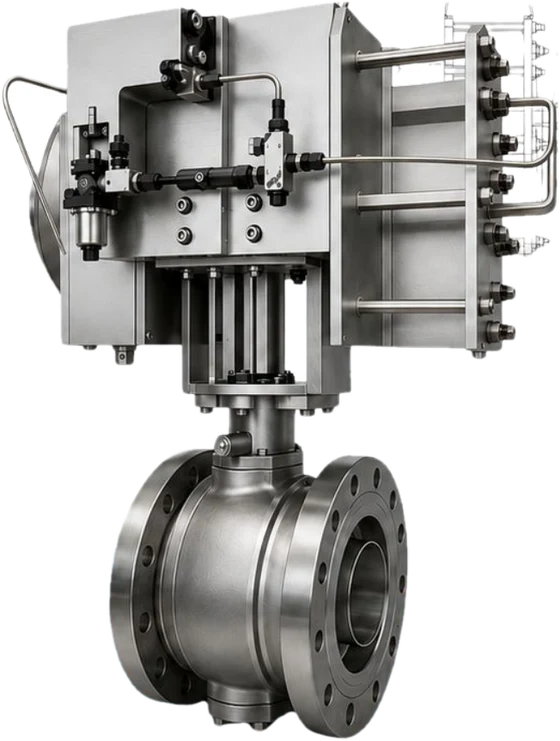
Valve actuators automate the valves Optimus Distributor supplies: pneumatic and electric quarter-turn units for ball and butterfly valves, and multi-turn drives for gate and globe patterns. The catalogue carries 23 actuator line items alongside dedicated butterfly valve actuator packages, and engineers select torque, fail action and control interface against the valve's own figures — so the actuated package arrives matched, mounted and tested rather than assembled ad hoc on site.
- Line
- Optimus actuation
- Catalogue
- 23 actuator line items
- Covers
- Pneumatic & electric quarter-turn · multi-turn
- Status
- Optimus house line
- Assembled at
- Subang Jaya, Selangor
What we automate
Any quarter-turn valve in the catalogue is a candidate for actuation: ball and butterfly patterns take a rotary actuator directly on an ISO mounting pad, which is why they dominate automated service. Multi-turn drives cover the rising-stem side — gate and globe valves whose stems must be turned many revolutions between open and closed. The valves themselves come from the same racks as everything else we sell, the KITZ line first among them, and the same rotary logic extends beyond pipe to duct: DTL industrial dampers are driven by the same actuator families. The catalogue carries 23 actuator line items plus 5 dedicated butterfly valve actuator line items — the house line that turns a manual valve into an automated package.
Pneumatic or electric: the real trade
The pneumatic-versus-electric decision is mostly decided by two questions: what utility does the site already run, and what must the valve do when that utility fails? Pneumatic actuators are simple, fast and cheap to keep cycling — but they need instrument air, and their great gift is the spring-return option that drives the valve to a safe position on air failure with no electronics involved. Electric actuators need only a cable, position beautifully, and integrate directly with a control system — but on power failure a standard unit simply stops where it is, and fail-safe behaviour has to be bought deliberately as a spring-return or battery-backed variant. Neither is "better"; each is the obvious answer on the right site. What matters is deciding on failure behaviour first, then letting speed, duty cycle and utilities settle the rest.
Three actuation families, side by side
| Family | Speed | Fail action | Utilities needed | Typical valves |
|---|---|---|---|---|
| Pneumatic quarter-turn | Fast — full stroke in seconds | Spring-return gives true fail-open or fail-closed on air loss | Instrument air supply; solenoid and positioner as required | Ball and butterfly valves; quarter-turn dampers |
| Electric quarter-turn | Moderate — geared travel, precise positioning | Stays in last position on power loss unless spring-return or battery-backed | Power supply and control cabling only | Ball and butterfly valves in HVAC and process control |
| Multi-turn (electric) | Slow by design — many stem revolutions per stroke | Stays in last position; handwheel override for manual recovery | Power supply, control cabling, torque/limit settings | Gate and globe valves on isolation and regulation duty |
Guidance is general actuation engineering practice; line-item counts are our own catalogue counts across all brands in each category. Torque figures, supply pressures and voltages for a specific package come from the datasheets — we confirm them against your purchase order at quotation.
Open, closed, or last position — decide it first
Fail action is the one specification that cannot be retrofitted with a settings change: it is built into the hardware you buy. Work it out from the process, not the catalogue — what should this line do at the worst possible moment?
- Fail-closed — the default for fuel, steam and anything that must stop when control is lost
- Fail-open — for cooling flows and relief paths that must keep running unattended
- Fail-in-place — acceptable where holding the last position is genuinely safe, common on electric units
- Manual recovery — handwheels and declutchable overrides decide how you operate through an outage
The duty-first habit applies here exactly as it does to the valve itself — the reasoning is laid out in choosing the right industrial valve.
Sizing torque with margin
An actuator is sized against the valve's real torque demand — seating and unseating torque at the actual differential pressure, not the friction of a valve turned by hand on a bench. Good practice adds a safety factor above that figure, because torque demand grows in service: seats swell, media leaves deposits, and a valve that cycled freely at commissioning drags after a year in dirty water. Undersize the actuator and it stalls exactly when the process needs the valve to move; grossly oversize it and you pay more, mount more weight on the pipe, and risk hammering the seat on every close. This is a calculation we run with the valve's own figures in hand — one advantage of packaging the right isolation valve and its actuator from a single counter.
Mounted and tested before it ships
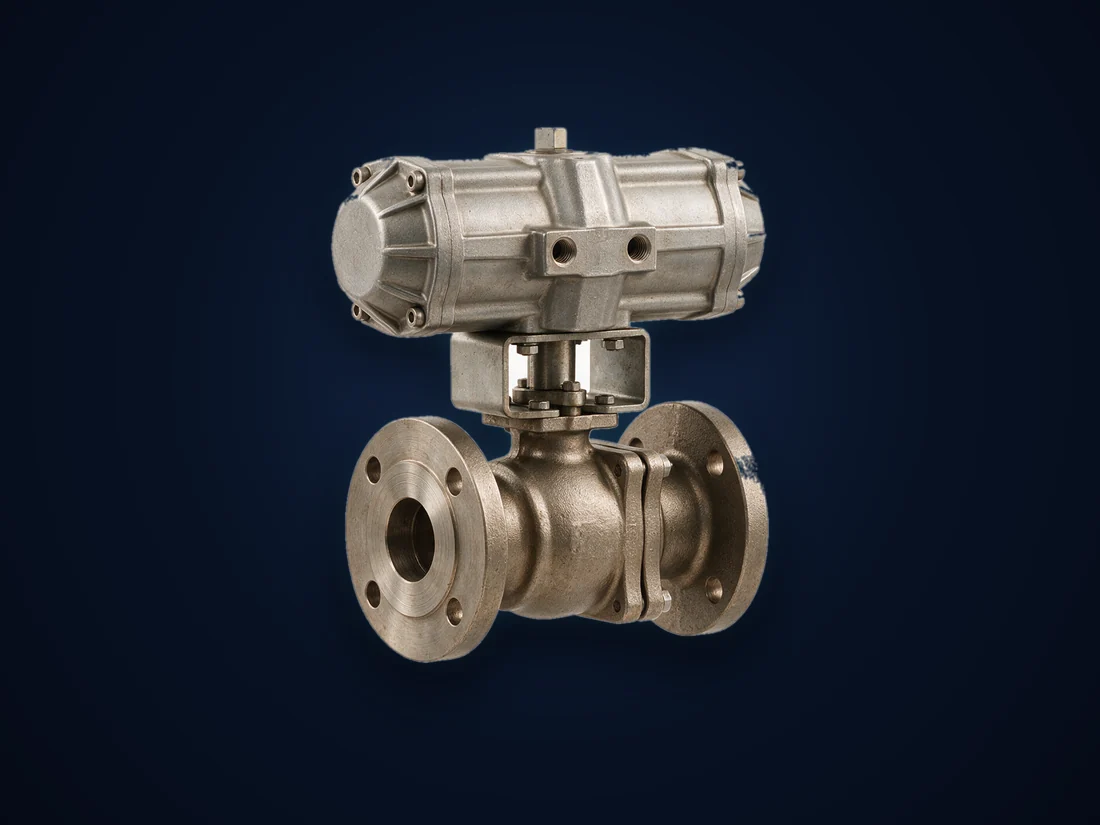
The difference between buying an actuated package and buying parts is who owns the interface. We don't just sell parts — we sit down with your engineers to make sure the whole assembly fits the service: bracket and coupling matched to the mounting pad, travel stops set, fail action verified, and the assembled unit stroked before it leaves Subang Jaya. What lands on site bolts into the line and answers to the control system — no adaptor fabrication, no on-site guesswork about rotation or stops.
An actuated-valve enquiry moves fastest when it arrives complete. Send these with the WhatsApp message or through any contact channel:
- Valve figure or type and size — or the duty, and we propose the valve too
- Operating and maximum differential pressure across the closed valve
- Available utility: instrument air pressure, or supply voltage and phase
- Required fail action — open, closed, or last position
- Control signal: on/off, modulating, and any position feedback needed
- Cycles per hour or day, and the environment the actuator lives in
One enquiry. One package. Already tested.
Valve, actuator, mounting and stroke test from a single counter — price, lead time and stock on the first reply.