 OPTIMUS DISTRIBUTOR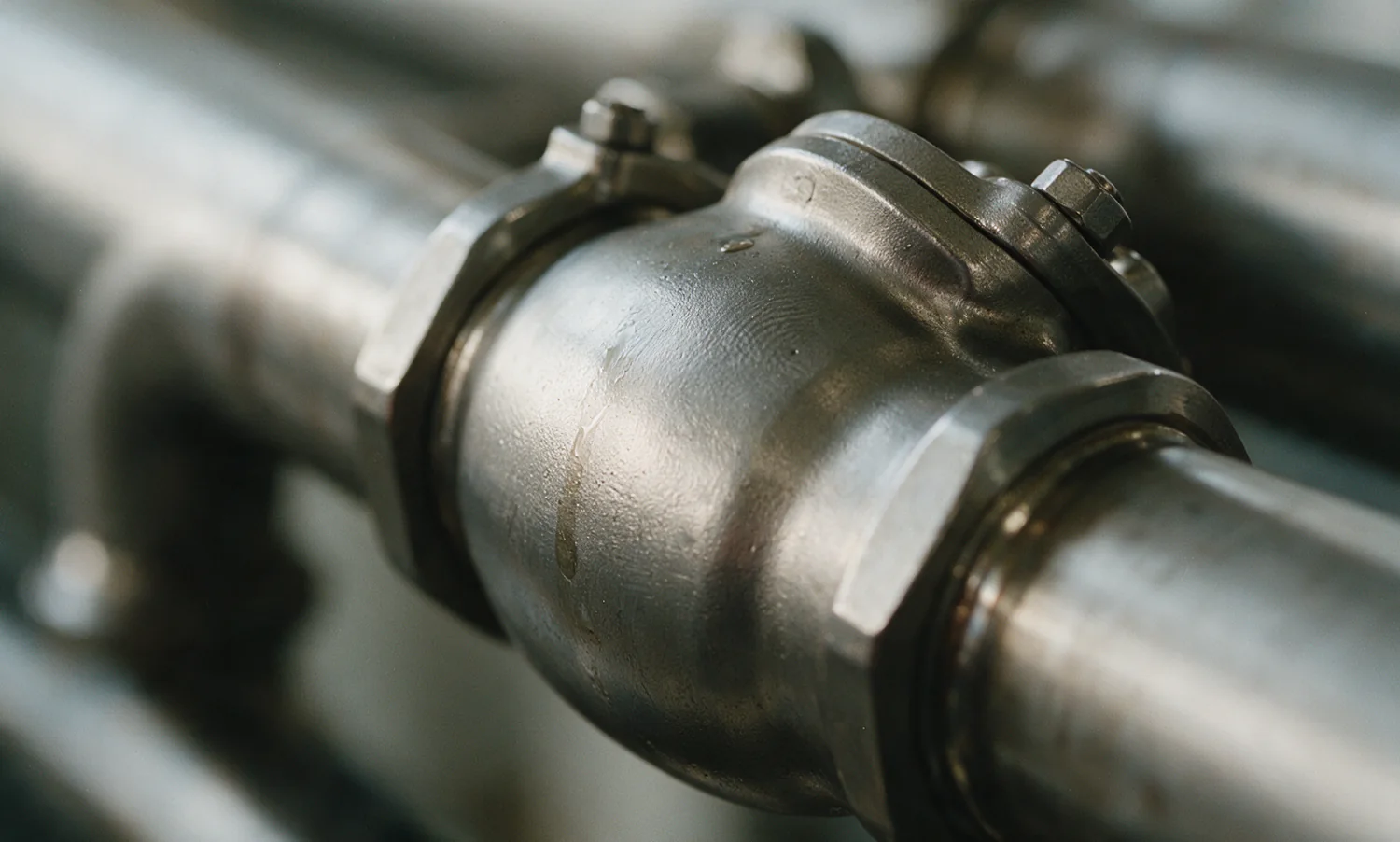
01The body is the choice you cannot revise later
Seats wear out and get replaced. Packing is repacked. Trim is swapped, actuators are re-mounted, handwheels are straightened. The body is different: it is cast once, it carries the pressure, it is welded or flanged into the line, and if it is wrong for the fluid the only remedy is to cut it out. That asymmetry is the reason body material deserves more attention than it usually gets on a purchase requisition, where it is often inherited from whatever the last project used.
Three materials cover the overwhelming majority of industrial enquiries we take: cast carbon steel to the WCB grade, cast stainless steel in the 316-family, and bronze. They are not a good–better–best ladder. Each is the correct answer to a different question, and paying for the "higher" one where it is not needed is one of the two classic buying mistakes we describe in our duty-first selection guide.
02WCB carbon steel: the general-service workhorse
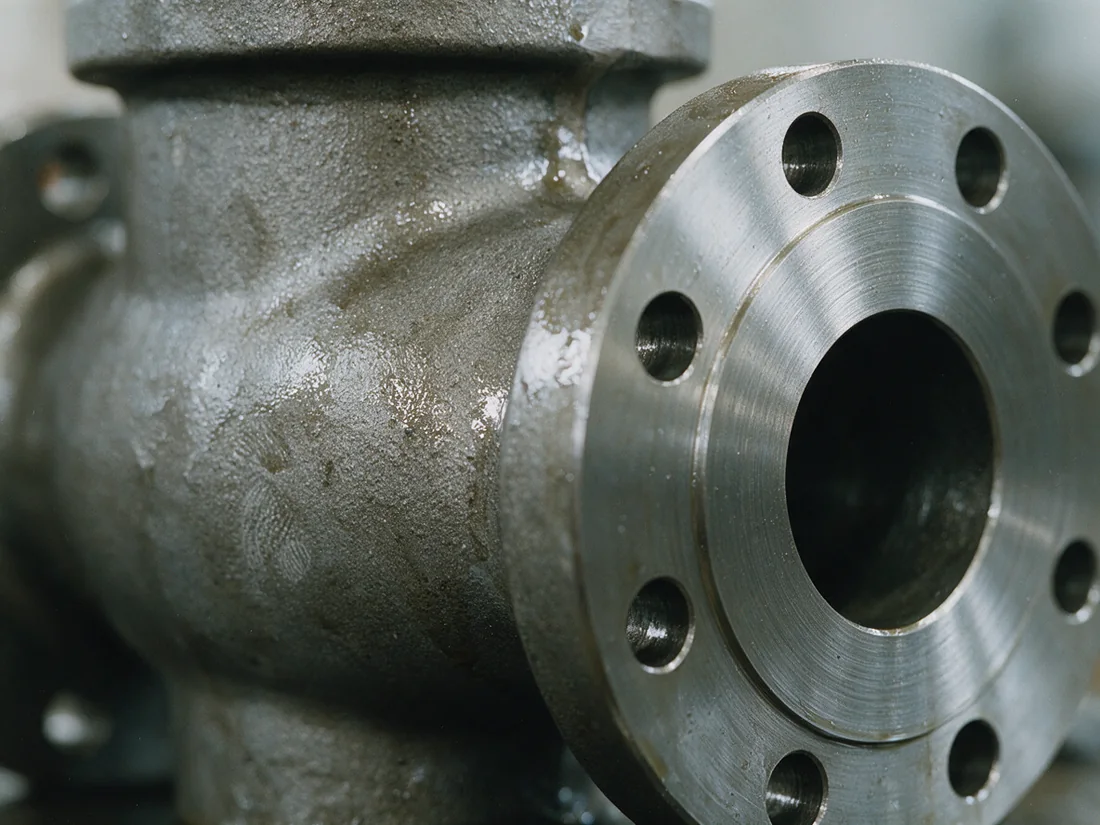
WCB is the common designation for cast carbon steel valve bodies to ASTM A216 Grade WCB — the material behind most flanged steel valves in refineries, power stations, palm oil plants and steam distribution across the country. It is strong, tough at ambient and elevated temperature, weldable, widely available in every pattern and class, and it is the cheapest way to get real pressure-bearing capability in larger bores.
Its weaknesses are the obvious ones: it rusts. In wet, humid or coastal service the external surface needs coating and the internal surface needs a fluid that is not aggressive to steel, which rules out most process chemicals, demineralised water in some regimes, and anything hygienic. It also has a published upper working-temperature limit driven by long-term graphitisation concerns in prolonged high-temperature service — commonly cited around 425 °C in reference tables, above which piping specifications typically move to alloy grades such as WC6 or WC9. At the cold end, plain carbon steel loses notch toughness, and low-temperature grades such as LCB and LCC exist for that reason. Treat all of those figures as published reference data and confirm them against the current edition of the standard your project cites.
03Stainless steel: corrosion resistance and range
The cast stainless most often quoted for valve bodies is CF8M, the casting equivalent of 316 stainless, with CF8 (equivalent to 304) behind it. The molybdenum in the 316 family is what buys resistance to a much wider range of process chemistry than carbon steel can face, and austenitic stainless keeps its ductility down to cryogenic temperatures as well as holding useful strength when hot — which is why it spans both ends of the range that WCB cannot.
Two things are worth knowing before treating it as the universal upgrade. First, austenitic stainless is susceptible to chloride stress-corrosion cracking, so hot chloride-bearing service — including some seawater and certain washdown regimes — can attack a stainless body that "should" have been immune; duplex and higher alloys exist for those duties. Second, stainless is not automatically the higher-rated body: under the published pressure–temperature tables, a Class 150 stainless body is rated slightly lower than a Class 150 carbon steel body at ambient temperature, and only pulls ahead as the temperature climbs. Read the actual rating table for the actual material group rather than assuming the more expensive metal wins on every axis.
04Bronze: water, air and utility service, economically
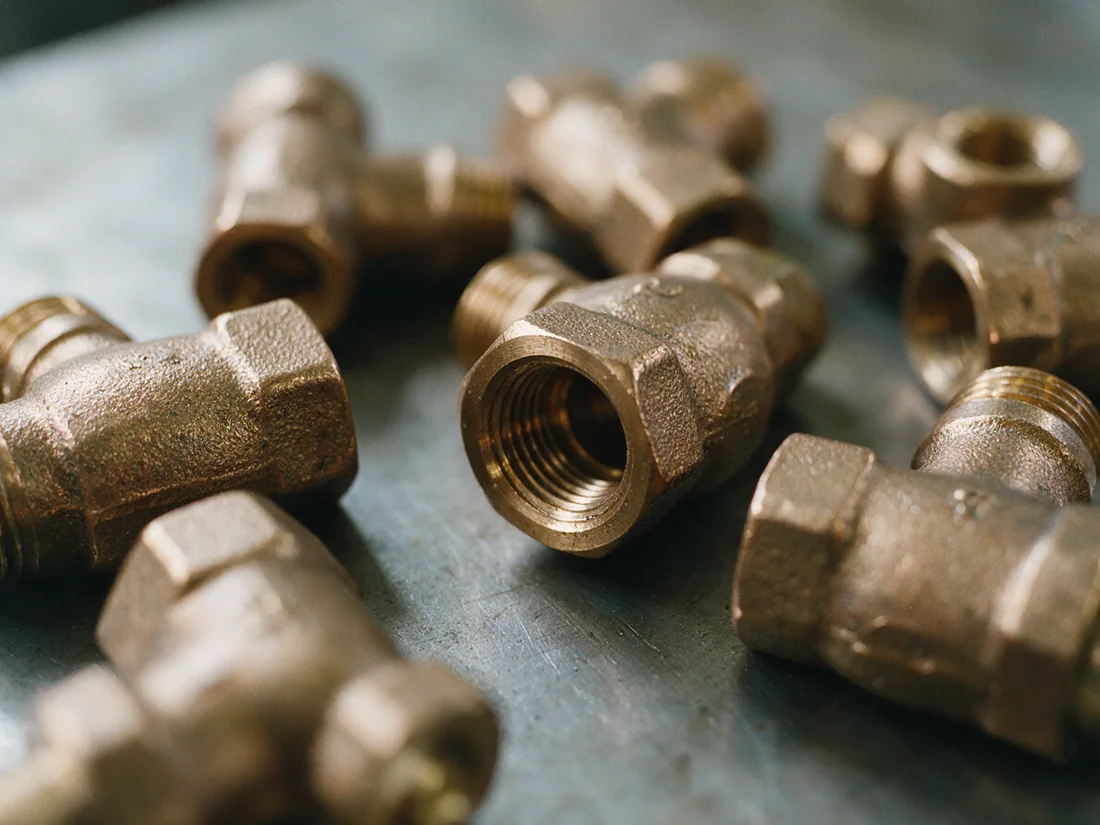
Bronze bodies — typically to ASTM B62 or B584 in the C83600 family — cover small-bore utility work: potable and service water, compressed air, low-pressure steam, heating and chilled-water branches, and marine and coastal applications where its resistance to seawater and its natural biofouling behaviour genuinely matter. It is usually supplied in threaded or solder-end form in the smaller sizes, which suits the plumbing and building-services world it lives in.
The limits are the flip side of the same properties. Bronze is a softer, weaker metal than steel, so the same pressure demands a heavier section and the practical pressure classes and bore sizes are lower. Published temperature limits are modest — commonly quoted around 200 °C, and often set by the end connection or the seat rather than the metal. It is also worth keeping bronze and brass distinct in a specification: dezincification is a brass problem, and where local water chemistry is aggressive a dezincification-resistant grade or true bronze should be called out explicitly. Again, treat these as published reference figures and confirm them against the current edition and your purchase order.
05The comparison, side by side
The table below is the working summary. Every figure in it is published reference data drawn from the material standards, not a certification of our own — confirm the numbers against the current edition of the standard named on your project specification before they reach a datasheet.
| Criterion | WCB carbon steel | Stainless steel (316 family) | Bronze |
|---|---|---|---|
| Typical casting spec | ASTM A216 Gr WCB | ASTM A351 CF8M (CF8 for 304) | ASTM B62 / B584, C83600 family |
| Strength & pressure capability | High — the value option for real pressure in large bores | High, and holds strength better as temperature rises | Lowest — heavier sections for the same duty, smaller classes |
| Corrosion resistance | Poor — rusts wet, needs coating and a benign fluid | Excellent across broad process chemistry | Very good in water, air and seawater service |
| Upper temperature (reference) | Commonly cited to about 425 °C; alloy grades above | Highest of the three in continuous hot service | Modest — commonly quoted around 200 °C |
| Low-temperature toughness | Poor — use LCB/LCC grades for cold service | Excellent, down to cryogenic duty | Adequate for utility ranges |
| Class 150 rating at ambient | Slightly higher than stainless in the published tables | Slightly lower at ambient; superior when hot | Rated to its own bronze standard, not the steel classes |
| Typical services | Steam, hydrocarbons, hot oil, general plant lines | Chemicals, hygienic and food duty, cryogenic, coastal | Potable and service water, compressed air, HVAC branches |
| Known weak point | External and internal corrosion; graphitisation when very hot | Chloride stress-corrosion cracking in hot chloride service | Strength ceiling; dezincification if brass is substituted |
| Usual sizes and ends | Flanged and butt-weld across a wide bore range | Flanged, threaded, weld and hygienic connections | Mostly small bore, threaded or solder ends |
| Relative cost | Lowest per unit of pressure capability | Highest — justified by chemistry or temperature, not habit | Low in small bores; uneconomic as bore grows |
| Choose it when | The fluid is benign to steel and the line is hot or large | The fluid, the hygiene rule or the environment objects to steel | Small-bore water, air or utility service in a building |
06Match the material to the fluid — and the neighbourhood
Selecting the body means answering two questions, not one. The first is what is inside: chemistry, concentration, temperature, whether solids or chlorides are present, and whether the product itself must not be contaminated by the valve. The second is what is outside, and it is the one most often skipped. A carbon steel body specified purely on process grounds can still corrode from the outside in a coastal plant, an open-air pipe rack in a monsoon climate, a washdown area, or a buried or insulated run where moisture sits against the metal. Insulated hot lines have their own well-known corrosion-under-insulation problem.
If the fluid, the temperature and the environment all tolerate the cheaper body, take the cheaper body. If any one of the three objects, the upgrade is not gold-plating — it is the specification. And if two of them disagree, that is the point to bring an engineer into the conversation rather than splitting the difference.
07Rating moves with temperature
A pressure class is not a single allowable pressure — it is a curve. The published pressure–temperature tables give allowable working pressure as a function of temperature for each material group, and the groups behave differently: carbon steel starts marginally higher and falls away faster, while austenitic stainless starts a little lower and holds on further up the scale. Two valves stamped with the same class in different materials are therefore not interchangeable at operating temperature.
Read the curve for the actual material against the line's worst credible case — including start-up, steam-out and upset conditions, not just the normal operating point — and state the governing standard and edition on the purchase order. The same discipline applies to sizing anything that regulates, which is why we treat pressure reducing valve sizing as its own exercise rather than a catalogue lookup.
08Cost in context
Body material is usually the largest single lever on the price of a valve, which makes it the place where both classic buying mistakes show up. Under-specifying — bronze where the temperature or the chemistry demands steel, carbon steel where chlorides are waiting — produces a valve that works on the day of commissioning and fails later, and we set out that arithmetic in why the cheapest valve usually costs the most. Over-specifying is quieter and just as wasteful: stainless everywhere on a clean utility loop buys nothing except a larger invoice and a more expensive spares holding, repeated for every replacement for the life of the plant.
The honest target is the least body that carries the duty for the design life, in a channel where the marking on the casting can be traced back to the maker — which is the practical value of an authorised distributorship. Once the material is settled, the pattern question follows in gate, globe or ball, unfamiliar terms are defined in the glossary, and more selection reading sits on our insights index. Where a duty sits on the boundary between two materials, we don't just sell parts — we sit down with your engineers to make sure they get the right solution, drawing on the range of our KITZ line and our other principals.